Shopping Cart
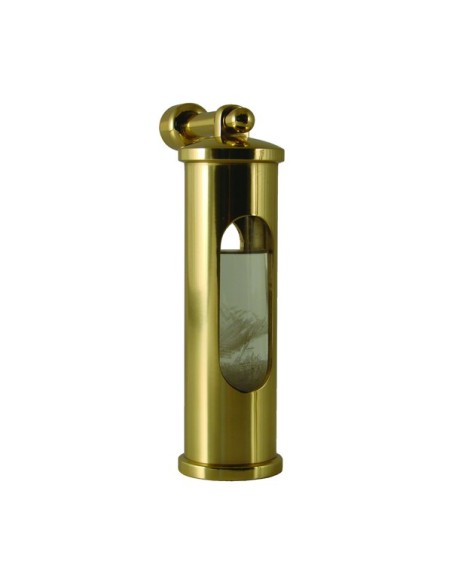


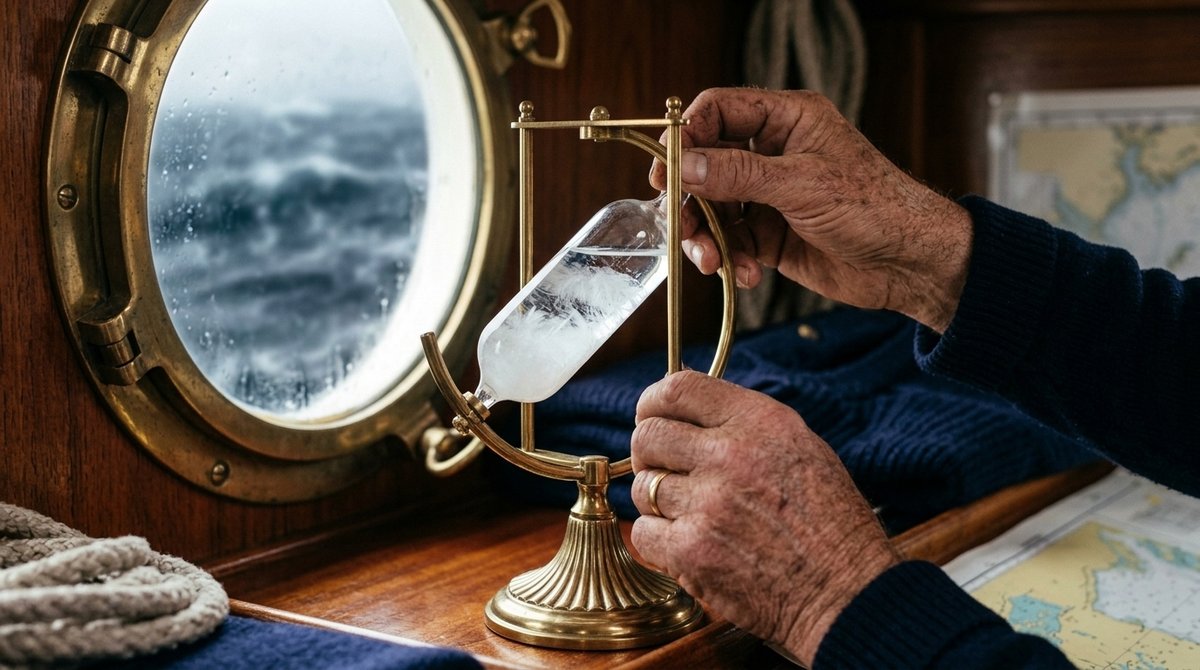
The storm glass is a sealed ampoule with a camphor solution that crystallises differently depending on atmospheric conditions. Admiral FitzRoy — captain of Darwin's Beagle — made it famous on board in the 19th century, and the Danes at Delite still craft it today.
What the glass tells you
- Clear liquid: stable, fair weather.
- Small floating crystals: humidity, possible drizzle.
- Growing ferns or feathers: worsening weather, a cold front or storm on the way.
- Crystals settled at the bottom: dry air, settled weather.
It is not a certified precision instrument: it is a fascinating piece of maritime tradition which, placed in stable conditions, tracks changing weather surprisingly well.
Where to place it
Away from radiators and direct sunlight, at a temperature as constant as possible: an interior bulkhead, the saloon table or a sheltered shelf. On board, mount it with its original wall bracket.
Liquid gone cloudy?
Delite storm glasses can be repaired: there is a repair kit and the manufacturer handles ampoule replacement. You will find both in our spare parts section.
A little history: FitzRoy and the "chemical barometer"
The storm glass became famous in the 19th century thanks to Admiral Robert FitzRoy, captain of the Beagle on Darwin's voyage and a pioneer of weather forecasting. FitzRoy described it in his manual for seamen and distributed it to British ports alongside the mercury barometer. It has been part of the classic chart-room kit ever since — more by tradition than by science.
What is inside
A sealed glass tube with a solution of camphor, potassium nitrate and ammonium chloride in alcohol and distilled water. As the temperature (and, some say, the pressure) changes, the camphor crystallises or dissolves and forms different shapes. The liquid must never be opened or topped up: it is sealed at the factory.
How to "read" the crystals
- Clear liquid: settled, fair weather.
- Cloudy liquid: clouds or rain on the way.
- Small floating dots: high humidity, fog.
- Crystals at the top: rising wind or a storm.
- Threads or feathers of crystal: wind.
- Large, abundant crystals in winter: hard frost or snow.
Let's be clear: modern studies show the storm glass reacts mainly to temperature changes and that its predictive value is limited. It is a historical, decorative instrument — beautiful on a shelf or bulkhead — not a replacement for an aneroid barometer.
Where to place it
Indoors, in the shade, away from radiators, stoves and direct sunlight, and preferably where the temperature is stable. If the glass "falls asleep" (always clear or always cloudy), a couple of days of real temperature swings will bring it back to life; never heat it forcefully or shake it hard.
Delite storm glasses
In our collection you will find the storm glasses by Delite, the Danish house from Måløv: wall models in brass and stainless steel and table versions on a wooden base, all with the same classic solution. For a broken glass or damaged holder there is a repair kit in our spare parts section. And if you are looking for a nautical gift with a story, the storm glass is one of the favourites — see it alongside other ideas in our nautical gift guide.
Frequently asked questions
Can I take it on board?
Yes; mount it in a fixed holder or gimbal, protected from knocks. The glass is sturdy, but it is glass.
Is the liquid dangerous?
The tube is sealed and needs no handling. If it breaks, ventilate, do not ingest and clean up with gloves: it contains alcohol and salts.
Can it be "recharged" or regenerated?
Neither necessary nor possible: the solution is not used up. Temperature changes are what keep the glass "alive".
Comments (0)