 English
 Español

Shopping Cart










- Equipo RelojesNauticos.es
- Nautical guides
- 0 likes
- 96 views
In a quiet living room, the tick of a mechanical clock and a chime marking the quarters create an atmosphere no digital device can copy. Few makers master that craft like Hermle, the German manufacturer that has built clocks and movements in southern Germany since 1922. This guide explains what makes the brand special and how to pick the right Hermle clock for your home.
A family of clockmakers for a century
The story starts in 1922 in Gosheim, in the Swabian Alb, a region that was for centuries the heart of German clockmaking. After the war Franz Hermle and his sons rebuilt the firm and in 1951 opened a second site in Reichenbach am Heuberg, where all production is now based. Hermle makes its own mechanical movements, with parts turned in its own workshop, and supplies movements to clockmakers worldwide. In 2023 the German Federal President gave King Charles III a Hermle bracket clock in walnut with a Westminster chime.
Five kinds of clock, five settings
Longcase clock: the heart of the room
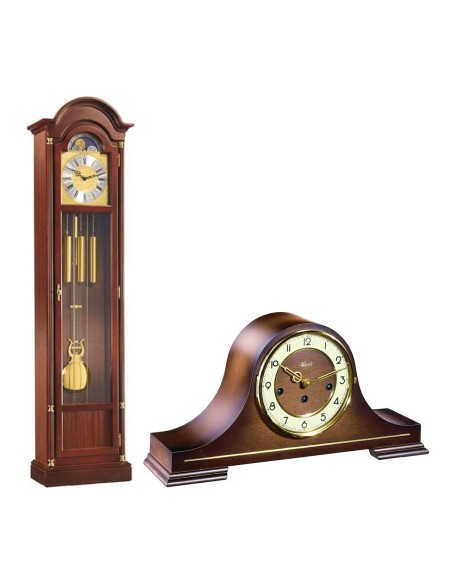
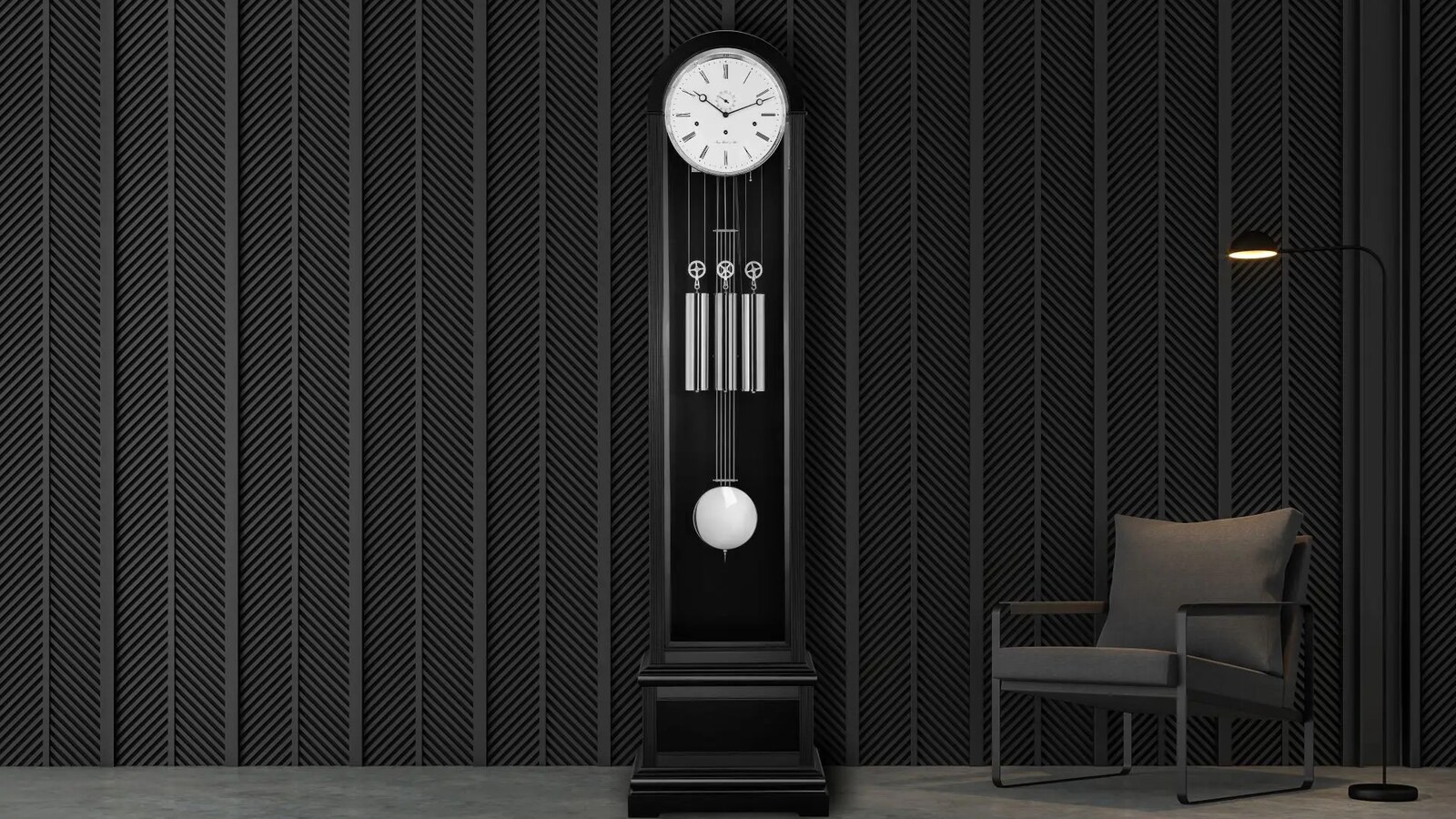
The longcase clock is the most imposing piece: a solid wooden case, weights on chains or cables, a long pendulum and an eight-day mechanical movement. Choose a Westminster chime or three melodies (Westminster, Whittington and St. Michael), often with a moon phase and a night-time silence. The Charlotte in black and chrome in our photo shows that a longcase clock suits a modern interior too.
Bracket and mantel clocks: for the fireplace or study
Bracket and mantel clocks bring the sound of a large clock to a shelf or desk. Most run on an eight-day mechanical movement with Westminster or an hour strike; there are skeleton models too, with the movement on show under glass.
Regulator: precision on the wall
The regulator was once the clockmaker's reference: a long pendulum, a calm beat and a visible movement. Many Hermle regulators show the moon phase, and some play Westminster or strike the half hour.
Wall clock: pendulum or silent
Among the wall and pendulum clocks two worlds meet: mechanical pendulum clocks with a strike, and contemporary quartz or radio-controlled models that are silent and always on time, such as the Grand Central station clock.
Tellurion: the solar system on your table
The tellurion is the most fascinating of all: the Earth circles the Sun in a year and the Moon circles the Earth in twenty-nine and a half days, with lunar phases, month and zodiac, driven by a mechanical movement with a Westminster chime.
Choosing: four questions
- Mechanical or quartz? A mechanical clock needs winding once a week and rewards you with tick and chime; quartz needs no care at all.
- Which melody? Westminster is the Big Ben classic; with three melodies you can change it to suit the day. On many product pages you can listen before you buy.
- Quiet at night? Look for an automatic night-time silence if the clock goes near a bedroom.
- Where will it stand? A longcase clock needs a firm, level floor; a regulator, a wall free of vibration.
A few models to start with
- Hermle Grandfather Clock Charlotte – Black and Chrome
- Hermle Grandfather Clock Kensington – Three Melodies, Walnut
- Hermle Regulator Mornington – Walnut, Moon Phase and Date
- Hermle Mantel Clock Stepney – Walnut, Mechanical Westminster
- Hermle Tellurium Brass – Black and Gold
- Hermle Wall Clock Grand Central – Black, Radio-Controlled
Browse all our interior clocks or the Hermle brand page. Prefer a marine clock? Read our guide how to choose a ship's clock.
Frequently asked questions
How often does a Hermle clock need winding?
Models with an eight-day movement, once a week. Each product page states the type of movement.
Can I silence the chime?
Many models have an automatic night-time silence and some a lever to switch the strike off; the product page says which.
Where are they made?
In Reichenbach am Heuberg in southern Germany, where Hermle has brought all its production together since 2021.