
Shopping Cart



- Equipo RelojesNauticos.es
- Nautical guides
- 0 likes
- 165 views
- 0 comments

Anyone who hears a striking ship's clock for the first time asks the same question: why does it strike eight bells at four, eight and twelve o'clock? The answer comes from centuries of life at sea.
Four-hour watches
On classic sailing ships the day was divided into four-hour watches. The ship's bell marked the passing of time: one stroke for every half hour of the watch.
- 1 bell — first half hour.
- 2 bells — first full hour.
- 4 bells — two hours: half the watch.
- 8 bells — four hours: end of the watch, change of crew.
The strokes are sounded in pairs — ding-ding… ding — so they can be counted effortlessly, even in the wind.
The ship's bell clock
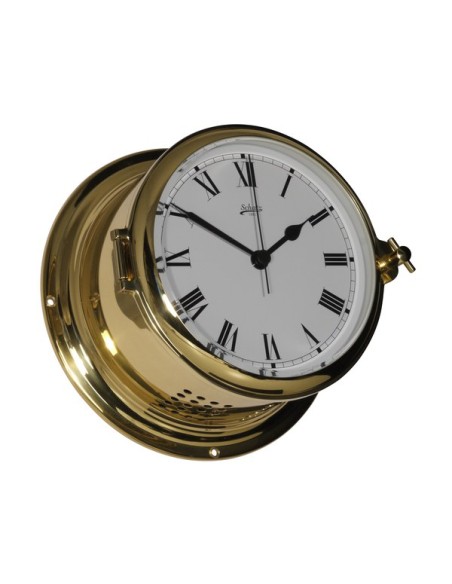
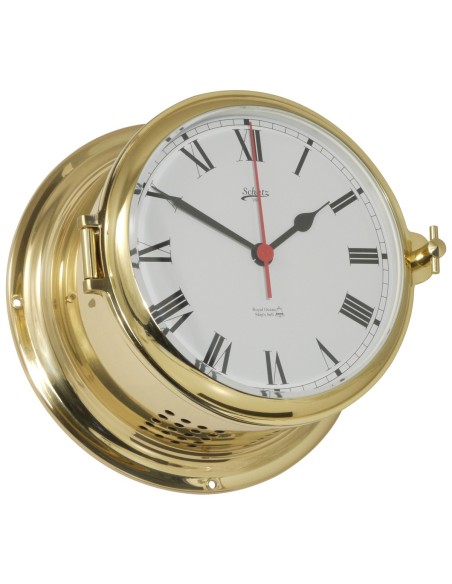
Ship's clocks with a bell strike reproduce exactly this code: they do not strike "landlubber" hours but the watch bells. That is why a true ship's clock strikes at most eight bells, then starts again. A detail that turns every half hour into a small maritime moment — at home too.
And the bell itself?
A brass ship's bell with its braided lanyard is a beautiful sounding object and the classic touch for the porch or hallway of a house by the sea. Our collection offers them in several diameters, polished or chrome-plated.
The watches: a day divided into seven
The bell code only makes sense with the watch system of the sailing navy. The day was divided into four-hour watches: midnight to 04:00, 04:00 to 08:00, 08:00 to 12:00, 12:00 to 16:00 and 20:00 to midnight. The afternoon, 16:00 to 20:00, was split into two two-hour dog watches, so that the crews rotated and nobody always stood the same night watch.
The bell table
Every half hour of a watch was marked with one more bell, struck in pairs, up to eight bells at the end of the four hours. The sequence repeats six times a day:
- 1 bell: 00:30 · 04:30 · 08:30 · 12:30 · 16:30 · 20:30
- 2 bells: 01:00 · 05:00 · 09:00 · 13:00 · 17:00 · 21:00
- 3 bells: 01:30 · 05:30 · 09:30 · 13:30 · 17:30 · 21:30
- 4 bells: 02:00 · 06:00 · 10:00 · 14:00 · 18:00 · 22:00
- 5 bells: 02:30 · 06:30 · 10:30 · 14:30 · 18:30 · 22:30
- 6 bells: 03:00 · 07:00 · 11:00 · 15:00 · 19:00 · 23:00
- 7 bells: 03:30 · 07:30 · 11:30 · 15:30 · 19:30 · 23:30
- 8 bells: 04:00 · 08:00 · 12:00 · 16:00 · 20:00 · 24:00
The strokes come in pairs — ding-ding, ding-ding, ding for five bells — so they can be counted easily from the deck or the top. "Eight bells" meant end of watch and relief; by extension, seafaring tradition also rings eight bells in tribute to a sailor who has died.
How a ship's clock reproduces it
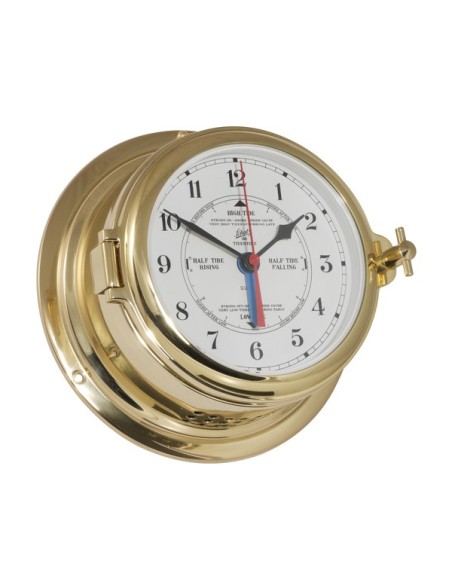
A ship's bell clock by Schatz 1881 repeats exactly this sequence: every half hour it strikes the bells of the watch, always in pairs. In the Royal series and the Midi series you will find clocks with a battery-driven strike on a brass bell, and the Midi also offers the 8-day mechanical ship's bell clock, the most traditional of the range. To set them, move the minute hand forwards only and pause at every half hour until the clock has finished striking; that keeps the strike in step with the time. How to wind the mechanical model is explained in this guide.
The real bell
If you prefer the genuine article, ship's bells offers cast-brass bells with clapper and rope lanyard, ready for the bulkhead, the porch or the front door: the age-old strike on board, by hand.
Frequently asked questions
Can the strike be silenced at night?
Schatz 1881 clocks with a battery strike usually have a switch to turn the strike off; on the mechanical model you can simply leave the striking train unwound.
Why does my clock strike the "wrong" number of bells?
Because the strike and the hands have fallen out of step, almost always after the hands were turned backwards. Advance the minute hand half an hour at a time, letting each strike finish, until they agree.
What are the "radio silence periods" on some clocks?
They are the sectors marked on the dial of some chart-room clocks, such as those by VION: minutes 15-18 and 45-48 of every hour, during which silence was historically kept on the distress frequency to listen for calls for help.
Comments (0)