
Shopping Cart
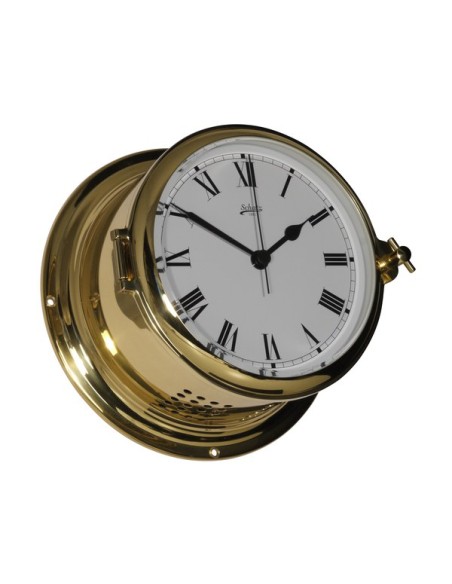
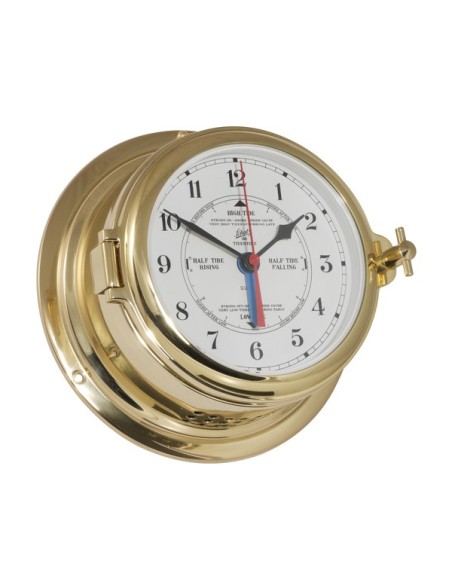
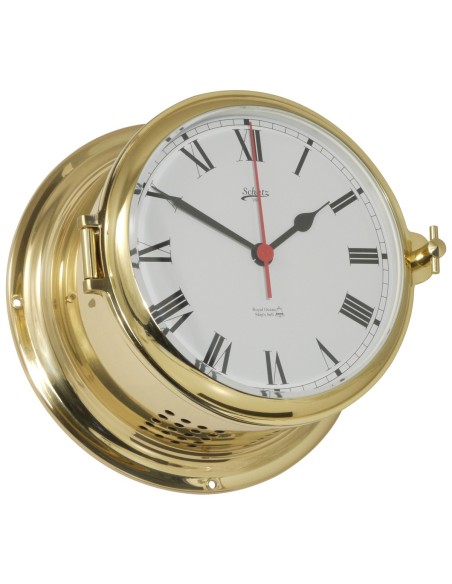





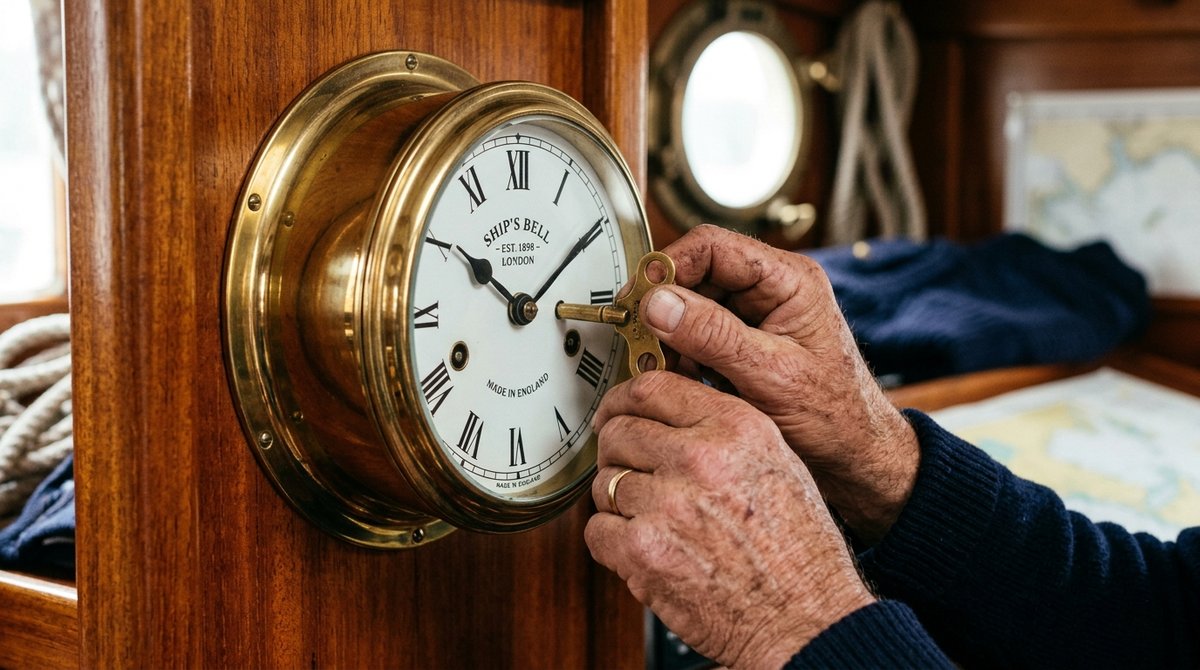
A mechanical ship's clock needs no batteries: it lives on the winding you give it. Classic Schatz 1881 clocks such as the Royal and the Midi carry an 8-day movement: one full wind a week is enough.
Step by step
- Use the right key. Every clock comes with its winding key. Lost it? Our spare parts section stocks keys for Schatz Royal, Midi and Fyrkat.
- Turn in the indicated direction (usually clockwise) with smooth, regular strokes.
- Stop when you feel resistance. A fully wound spring must never be forced — that is where most damage happens.
- Pick a fixed day. The tradition on board is to wind on Sunday morning, so the clock never stops.
Running fast or slow?
Almost every movement has a small regulator (A/R or +/−) near the winding arbor or on the dial. Move it one tiny step and watch the clock for a week before correcting again.
What about striking clocks?
Clocks with a ship's bell strike often have a second winding square for the striking train. Treat it the same way: gently, until you feel resistance. Not sure your clock is healthy? Contact us — we also arrange repairs and original replacement movements through the manufacturer.
How long does a wind last, and when should you wind?
An 8-day movement is designed for a full week plus a small reserve. Don't wait for the clock to stop: a mainspring that always works in its middle range keeps better time than one that runs down every week. That is why the on-board habit of winding on the same day every week is not just tradition — it is precision.
The mechanical models from Schatz 1881 — such as the 8-day clock in the Midi series — come with their key; the quartz models in the Royal and Fyrkat series are not wound at all: they run on a battery that is changed every year or two.
Common mistakes to avoid
- Forcing the last quarter turn. Resistance means the spring is fully wound; one turn too many can break the spring or the click.
- Winding the wrong way. If the key "slips" without tension, you are turning backwards. Stop and reverse.
- Turning the hands backwards on a striking clock. On ship's bell clocks, always set the time by moving the minute hand forwards, and let the clock finish each strike before continuing.
- Winding with the clock in your hand. Wind it mounted on its bulkhead or resting on a stable surface, so the arbor is not stressed.
Setting the time after a stop
If the clock has stopped, wind it first and then set the time with the minute hand, always forwards. On clocks with a ship's bell strike, pause at each half hour so the striking train stays in step with the real time; the eight-bell sequence and the watch system are explained in our guide to the ship's bell code.
Long-term care
A quality mechanical movement appreciates a service and oiling every five to eight years, depending on use and environment. On board, humidity and salt are the enemies: keep the clock in a ventilated, dry spot away from direct spray, and clean the brass case as described in caring for marine brass. If a repair is needed, our spare parts section stocks keys, glasses and original replacement movements.
Frequently asked questions
Can I wind the clock before it stops?
Yes — and it is the recommended practice. An 8-day clock can be wound every week even if it still has reserve left.
I've lost the key — will any key do?
No: the winding square has a specific size. Tell us the model (Royal, Midi or Fyrkat) and we will send the right key.
Does the clock stop in heavy seas?
Mechanical ship's clocks are built for motion; if yours stops often, the cause is usually lack of winding or a movement that needs cleaning, not the movement of the boat.
Comments (0)