Shopping Cart
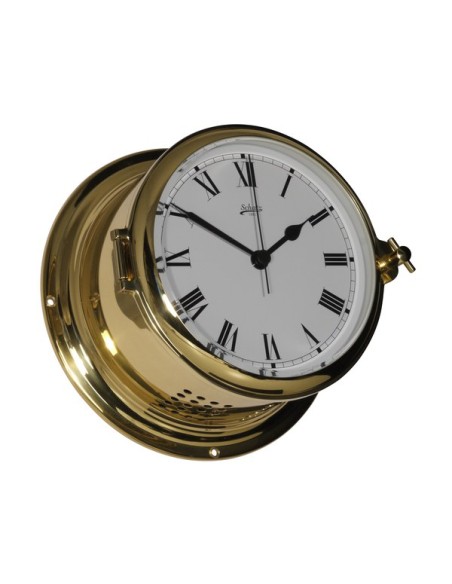
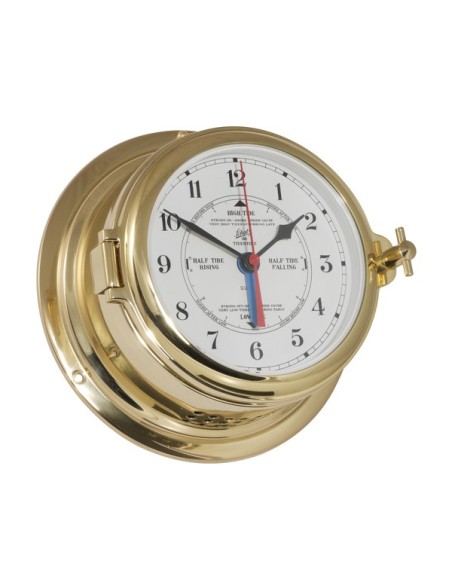
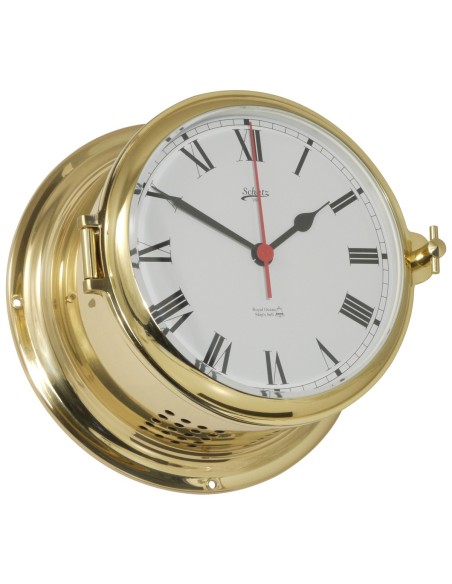
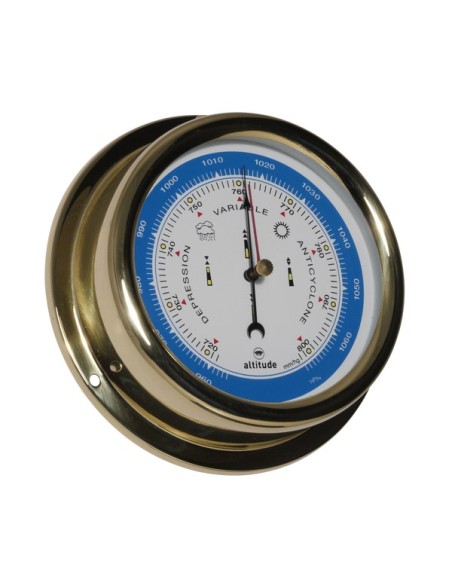


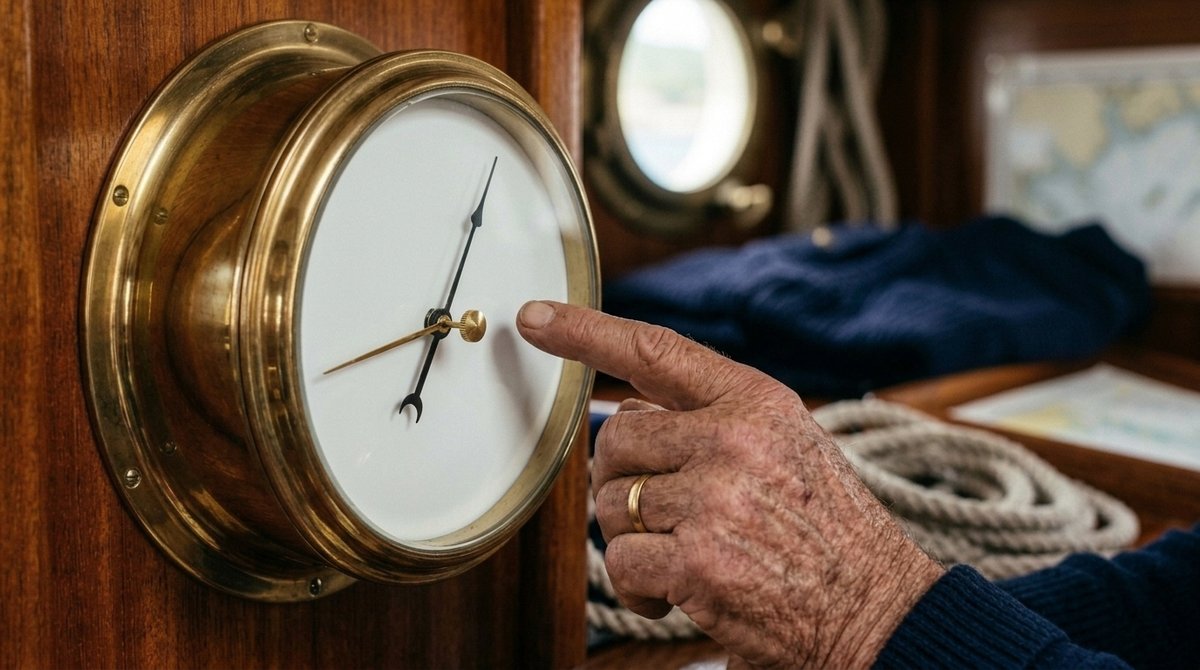
An aneroid marine barometer measures air pressure without liquids or electronics: a sealed metal capsule compresses and expands with pressure and drives the hand. What matters is not the absolute value but the trend.
Reading the trend
- Rising pressure: improving, settling weather.
- Slow fall: likely gradual deterioration.
- Fast fall (3-4 hPa in 3 hours): beware — strong wind or a gale on the way.
That is what the golden reference hand is for: set it over the black hand in the morning, and by evening you will see at a glance how far and which way the pressure has moved.
Calibrating in three minutes
- Look up the current official sea-level pressure from a nearby weather station.
- Gently turn the adjustment screw on the back of the instrument until the hand shows that value.
- Tap the glass lightly with a knuckle before each reading: it frees the mechanism from friction.
Hi-Sensitiv: for the demanding
The Hi-Sensitiv models by Schatz 1881 and Altitude use large-diameter or double-diaphragm capsules that react to the smallest pressure changes: the serious sailor's choice. Discover them in our marine barometer collection.
How an aneroid barometer works
Inside the case sit one or more evacuated metal capsules (Vidie capsules) that compress when atmospheric pressure rises and expand when it falls. A lever system amplifies that movement of a few tenths of a millimetre and transfers it to the hand. No liquids, no batteries: just precision mechanics, which is why a good aneroid such as the Schatz 1881 "Hi-Sensitiv" lasts for decades.
What matters is not the number but the trend
A wall barometer is not read like a thermometer. The absolute value (1013, 1020…) says little; what is useful is which way it is moving and how fast. That is why every aneroid has a second hand, the reference hand, moved with the knob on the glass: set it over the black hand and a few hours later you will see at a glance whether pressure has risen or fallen.
- High, steady pressure (above ~1020 hPa): settled weather.
- Slow rise: improving.
- Slow, sustained fall: deteriorating; rain or wind within a day or two.
- Rapid fall (more than 3 hPa in 3 hours): strong wind or a gale approaching; take note if you are sailing.
- Very rapid rise after a fall: unsettled, gusty weather.
How to calibrate it
- Look up the sea-level pressure from the nearest official station (in Spain, AEMET) or the harbour. It must be pressure reduced to sea level — the value used by all domestic and marine barometers.
- Tap the glass gently so the hand overcomes friction and settles.
- On the back you will find an adjusting screw. Turn it little by little until the hand matches the reference value.
- Check again a few days later; once calibrated, it rarely needs touching.
If you live or sail at some altitude (an inland reservoir, a mountain lake), sea-level calibration is still the right one: the point is to compare with weather reports, which are always given reduced to sea level.
Where to hang it and how to care for it
Away from heat sources and direct sunlight, which shift the reading and yellow the dial, and somewhere you pass by: a barometer is only useful if it is consulted. It pairs naturally with a ship's clock of the same diameter and finish; our guide to mounting your marine instruments explains heights and spacing. Clean the brass as described in caring for marine brass and never open the case: the mechanism needs no oiling.
Frequently asked questions
Why tap the glass before reading?
The internal levers have slight friction; the tap frees the hand and shows the true pressure. It has been the "official" way to read for two centuries.
My barometer disagrees with my phone app
Many apps show station pressure (not reduced) or data from a distant station. Always compare with sea-level pressure from a nearby observatory.
What is "Hi-Sensitiv"?
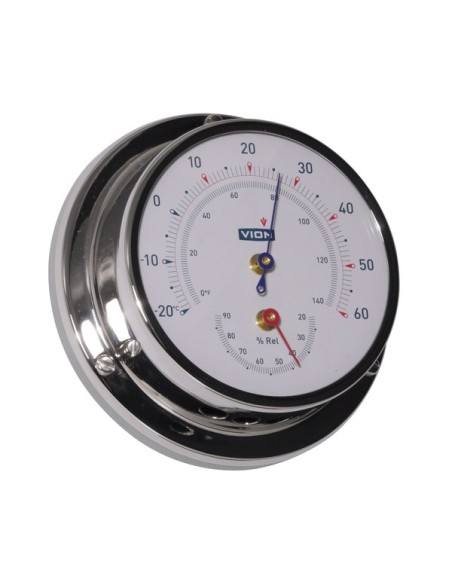
It is Schatz 1881's high-sensitivity mechanism: it reacts sooner and more clearly to small pressure changes. You will find it in the barometers of the Royal, Midi and Fyrkat series and throughout our barometer collection, alongside the stainless steel models by VION.
Comments (0)